

Richness and Abundance of Tree Species in the Bonsai Field, Mount Hamiguitan, San Isidro, Davao Oriental
DOI:
https://doi.org/10.59120/drj.v7i2.482Keywords:
Abundance, Richness, Mt. Hamiguitan, Bonsai, SpeciesAbstract
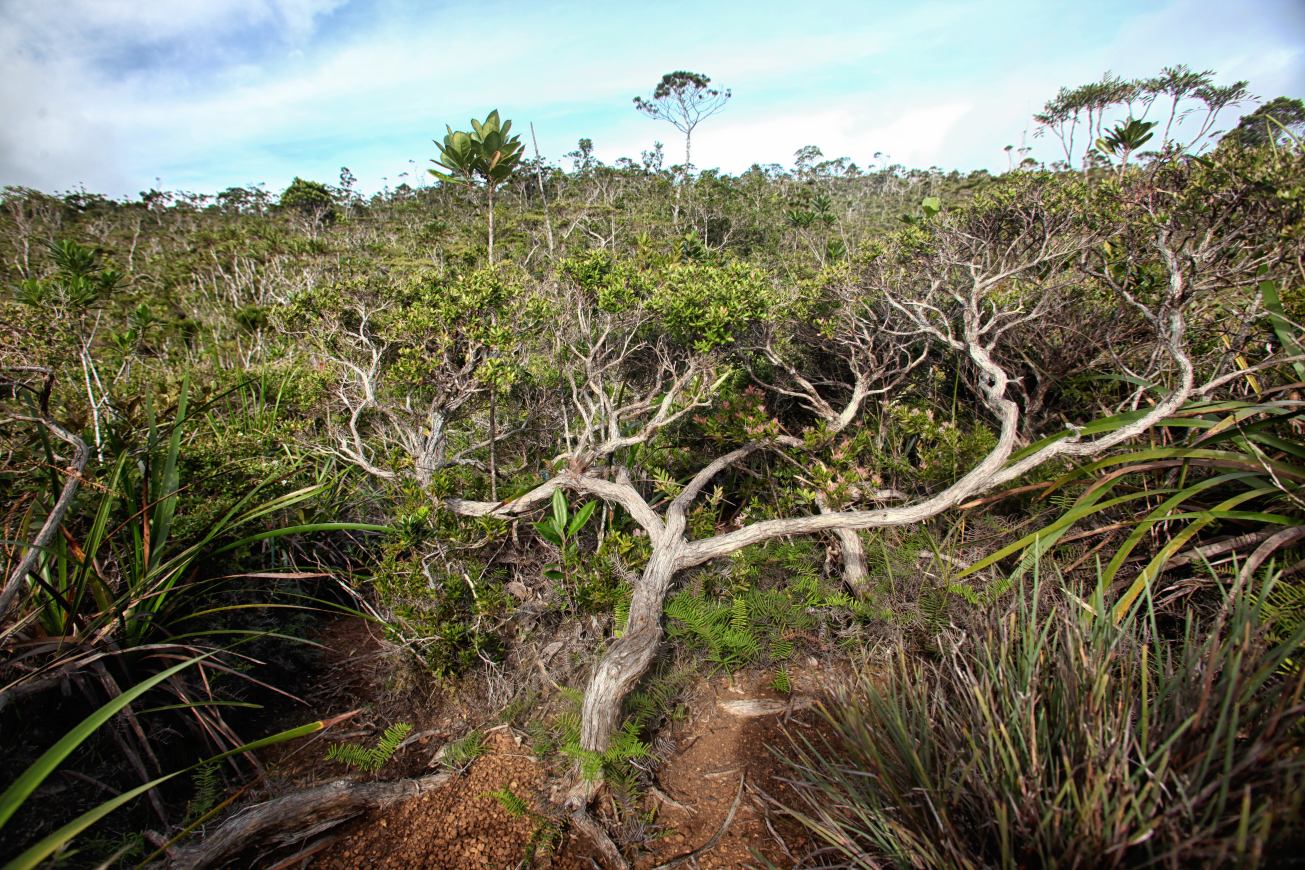
The study aimed to assess the richness and abundance of tree species in the Bonsai Field, Mt. Hamiguitan, Davao Oriental. Sampling was conducted within the Bonsai Field, where ten remote-sensed sample plots were established. The presence of bonsai tree species in all plots was recorded, counted, and identified using mechanical sampling with a line plot method. Species identification employed both reference methods and the Indigenous Knowledge System, using local common names for all species. A total of 67 species were documented, of which 38 species (57%) were identified with local names and 29 species (43%) remained unidentified. Seven species showed 100% constancy, and 12 species (18%) had 90% fidelity. Eleven species (16.41%) exhibited high mean density, ranging from 1,000 to over 5,000 stems/ha, with a total mean percent cover of 62.74%. Eleven species were dominant, while 56 were rare. Among dominants, Chinese cedar (Toona sinensis) had the highest mean density (5,280 stems/ha) and percent cover (15.20%), followed by Bitanghol (Calophyllum blancoi) (2,340 stems/ha, 6.88%) and Malasulasi (Leptospermum flavescens Sm.) (2,220 stems/ha, 6.39%). Distribution of bonsai trees showed a clumped pattern; the highest variance values were recorded for Chinese cedar (Toona sinensis) (1,257.73) and Zysigium spp. (Syzygium P. Browne ex Gaertn) (1,138.80), while Unknown species_2 had the lowest (0.50). The Shannon Diversity Index was 3.4060, the Evenness Index 0.8101, and the Dominance Index 21.1416, indicating high species diversity. The data provide baseline information for environmental management, proper utilization of forest resources, and conservation of the Bonsai Field and Mt. Hamiguitan Range.
Downloads
References
Donato. 1. 1. 2006. Species Richness and Some Notes on the Reproductive Biology of Murid Rodents in Mt Hamiguitan Range Wildlife Sanctuary, A Basis for Management and Conservation, Davao Oriental State College of Science and Technology Unpubished.
Department of Natural Resources and United Nations Environment Programme. 1997 Philippine Biodiversity, An Assessment and Action Plan. Department of Environment and Natural Resources, United Nations Environment Programme and Bookmark. Inc., 264-A
Pablo Campo Sr. Avenue, Makati City, Philippines, https://catalogue.nla.gov.au/catalog/1924531
De Guzman, E.D., R.M. Umali, D.S. Emiliano. 1986. Guide to Philippine
Flora and Fauna. Dipterocarps and Non-dipterocarp, Vol. III. JMC PRESS, Inc. 388 Quezon Avenue. Quezon City, Philippines. https://opac.mmsu.edu.ph/cgi-bin/koha/opac-detail.pl? iblionumber=19405&shelfbrowse_itemnumber=24944&utm
English. S.C Wilkinson & V Baker. 1997. Survey Manual for Tropical Marine Resources. 2nd edition. Australian Institute of Marine Sciences, Townville. Australia. https://www.aims.gov.au/sites/default/files/Survey%20Manual-sm01.pdf?
Hansel, C. G., Poblete, T. O., Quimpang, V. T., Lumactud, R. A. C., Ganob, D., Lumimas, E., Lumimas, M., Pacut, L., & Panchito, R. (2004). Participatory biodiversity inventory and assessment of Lake Duminagat, Mt. Malindang Natural Park, Misamis Occidental, Mindanao, Philippines. SEARCA / Biodiversity Research Programme for Development in Mindanao. ISBN 971-560-113-8.
Hunter, M.I. Jr. 1990. Wildlife, Forests and Forestry. Principles of Managing Forests for Biological Diversity Prentice Hall, Inc. A Division of Simon and Schuster. Englewood cliffs, New Jersey 07632. https://www.si.edu/object/siris_sil_1100810?
Madulid, D.A. 2001. Dictionary to Philippine Plant Names, Vol. I & II. Domingo A. Madulid and The Bookmark Inc., 264-A Pablo Campo Sr. Avenue, Makati City, Philippines. https://openlibrary.org/books/OL3604015M/A_dictionary_of_Philippine_plant_names? utm
Miller, T. G., 1990. Resource Conservation and Management. Wadsworth Publishing Company, Belmont, California. https://books.google.com.ph/books/about/Resource_Conservation_and_Management.html?id=G-IsAQAAMAAJ&redir_esc=y
Odum, E. P. 1971.Fundamentals of Ecology 3rd Edition. W. B. Saunders Company. West Washington Square, Philadelphia. https://catalogue.nla.gov.au/catalog/2620073?
Peet, R. K. 1974. The Measurement of Species Diversity. Annual Review of Ecology and Systematics 5: 285–307.
DOI: 10.1146/annurev.es.05.110174.001441
Ruelo, M. 2006.Non-Market Valuation of the Benefit of Protecting Mt.
Hamiguitan Range in the Different Impact Areas, Davao Oriental.
Davao Oriental State College of Science and Technology. Unpublished.
San Isidro, Tourism Office File. 2001.
San Isidro, Tourism Office File 2006.
Seeber, G., H.J. Weidelt, V.S. Banaag. 1979 Dendrological Characters of Important: Forest Trees from Eastern Mindanao. German Agency for Technical Cooperation (GTZ), Germany
Stephenson, P. J., M. C. Londoño-Murcia, P. A. V. Borges, L. Claassens, H. Frisch-Nwakanma, N. Ling, … L. Fumagalli. 2022. “Measuring the Impact of Conservation: The Growing Importance of Monitoring Fauna, Flora and Funga.” Diversity 14 (10): 824. https://doi.org/10.3390/d14100824
Stiling. P 1998. ECOLOGY Theories and Application, 20d edition. Prentice Hall Simem and Schuster (Asia) Pte Ltd. 317 Alexandra Road, Singapore https://books.google.com.ph/books/about/Ecology.html? id=LN4UAQAAIAAJ&redir_esc=y
Verana, C. N. 2003. Preliminary Analysis of Selected Physico-chemical Characteristics of Soil in Bonsai Forest, San Isidro, Davao Oriental. Davao Oriental State College of Science and Technology. Unpublished.
http://www.beared2006.ph/news/press%20releases/2005/sept/pseo3%20%2093.imml
http://www.men.org/1/mendoparks/jugtrl26.html#ful. Bonsai or Pygmy Forest
http://www.esajournals.org/esaonline//request-get-abstract&issn=0012-9615&volume=045&issue=02&page=0109ss. The Soil in the Forest.
http://www.mendocinocites.com/places/paks/mendocino-pygmy-forest.shtml. What is Pygmy Forest?
http://www.pearrd.dost.gov.ph/news/press%20releases/2005/sept/psep05%20-2093.htm. September 24, 2006. Forest Ecosystem in Mt. Hamiguitan Range.
http://en.wikipedia.org/wiki/Pygmy_forest. Pygmy Forest Edaphic Climax Pattern.
http://www.mcn.org/1/mendoparks/jugtrl126.htm#fnl. Jenny Pygmy Forest in Mendocino, California
Downloads
Published
Issue
Section

License
Copyright (c) 2007 Jan Rey Sarabia Hapinat

This work is licensed under a Creative Commons Attribution-NonCommercial 4.0 International License.
DRJ is an open-access journal and the article's license is CC-BY-NC. This license allows others to distribute, remix, tweak, and build on the author's work, as long as they give credit to the original work. Authors retain the copyright and grant the journal/publisher non-exclusive publishing rights with the work simultaneously licensed under a https://creativecommons.org/licenses/by-nc/4.0/.