

Elevation-Driven Shifts in Species Diversity, Endemicity, and Vegetation Structure across the Mount Hamiguitan Range Wildlife Sanctuary, a UNESCO World Heritage Site in Davao Oriental, Philippines
DOI:
https://doi.org/10.59120/drj.v17i1.500Keywords:
Conservation Management, Endemism, Forest Stratification, Remote Sensing, Tropical Forest EcosystemAbstract
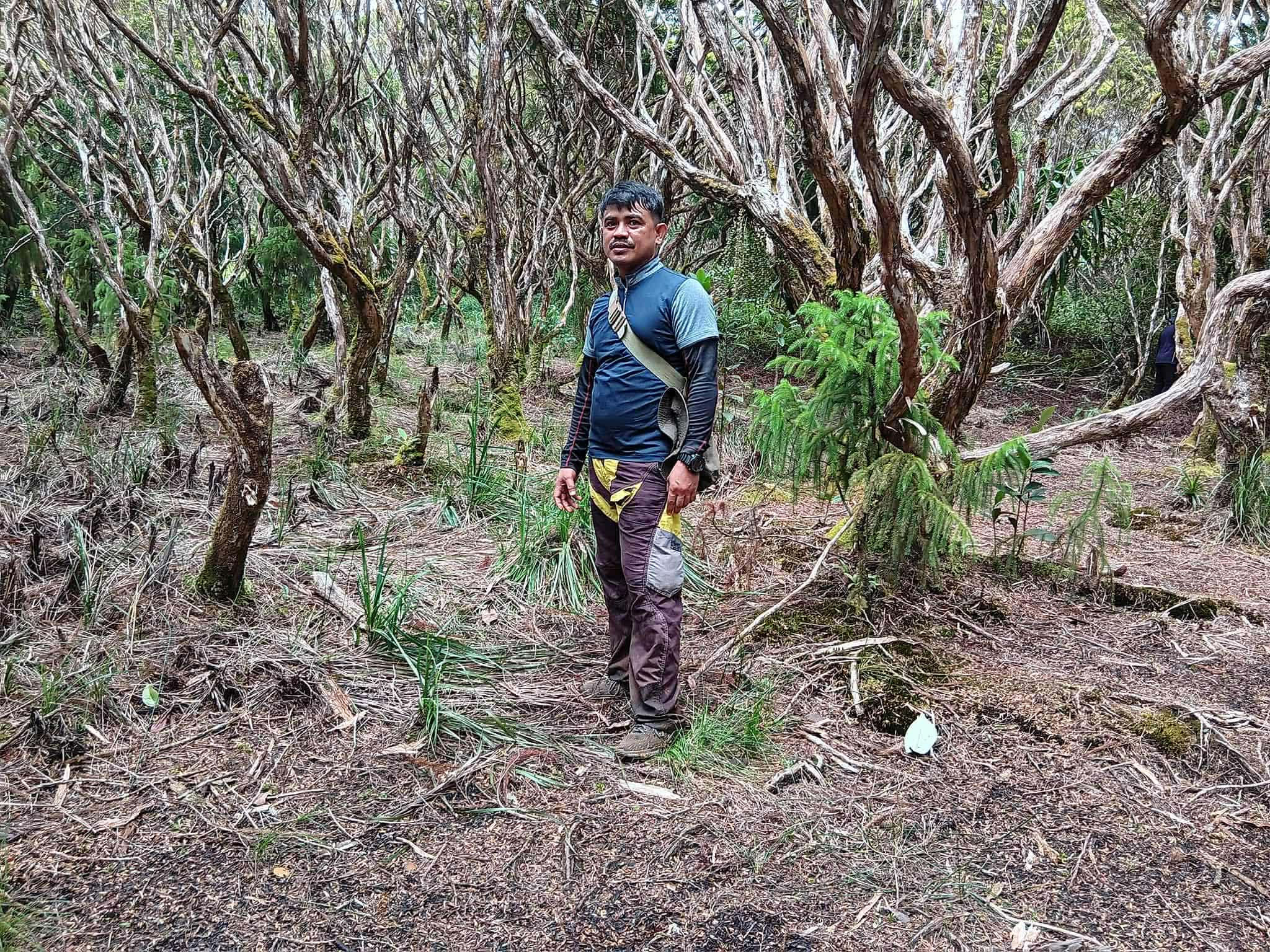
Mount Hamiguitan Range Wildlife Sanctuary (MHRWS) in Davao Oriental, Philippines, is among the country’s most ecologically diverse and geologically unique mountain ecosystems. Rising to 1,620 m above sea level and covering 6,834 ha, it is part of the Eastern Mindanao Biodiversity Corridor. Declared a national park in 2003 and designated a UNESCO World Heritage Site in 2014, Mt. Hamiguitan supports numerous endemic and threatened species through collaborative stewardship by national agencies, local governments, and indigenous communities. This study analyzed vegetation profiles and land cover types along Mt. Hamiguitan’s elevational gradient to clarify biodiversity patterns and ecological zonation. Sixteen vegetation quadrats were systematically established at 100-m intervals from 140-1,620 m above sea level. Species composition, forest type, and mean diameter at breast height (DBH) were recorded and integrated with satellite-derived land cover data and GIS analysis to evaluate habitat distribution and human influence. Five major forest formations were identified: agroecosystem (75–420 m), dipterocarp forest (420–920 m), montane forest (920–1,160 m), mossy forest (1,160–1,350 m), and mossy-pygmy forest (1,160–1,620 m). Elevation strongly influenced shifts in species diversity, endemicity, and vegetation structure. Lower elevations were dominated by agriculturally influenced species such as Ficus indica and Chrysophyllum cainito, while higher zones supported stunted, endemic taxa including Leptospermum flavescens and Tristaniopsis micrantha, adapted to ultramafic soils and cooler, wind-exposed environments. The study underscores Mt. Hamiguitan’s role as a vertically stratified refuge for endemic biodiversity and highlights the need to protect high-altitude forests, restore buffer zones, and monitor climate-driven species shifts.
Downloads
References
Amoroso, V. B., Acma, F. M., Coritico, F. P., Gorme, F. S., Lagunday, N. E., Salolog, M. C. S., and Colong, R. D. (2018). Floral diversity assessment of the buffer zones and vicinity of the Mt. Hamiguitan Range Wildlife Sanctuary (MHRWS), Davao Oriental: basis for inclusion to protected area zone. Philippine Journal of Systematic Biology, 12(2), 36-51.
Amoroso, V. B., Coritico, F. P., and Fritsch, P. W. (2016). Species richness and conservation status of ferns and lycophytes in Mt. Hamiguitan Range Wildlife Sanctuary, Davao Oriental, Philippines. Philippine Journal of Science, 145(2), 127-137.
Amoroso, V. B., Lagunday, N. E., Coritico, F. P., and Colong, R. D. (2017). Nepenthes alfredoi (Caryophyllales, Nepenthaceae), a new species of pitcher plant from Mindanao, Philippines. Philippine Journal of Systematic Biology, 11(2), 14-19.
Downloads
Published
Issue
Section

License
Copyright (c) 2026 Ramil L. Ramos, Phoebe Nemenzo-Calica, Emily S. Antonio

This work is licensed under a Creative Commons Attribution-NonCommercial 4.0 International License.
DRJ is an open-access journal and the article's license is CC-BY-NC. This license allows others to distribute, remix, tweak, and build on the author's work, as long as they give credit to the original work. Authors retain the copyright and grant the journal/publisher non-exclusive publishing rights with the work simultaneously licensed under a https://creativecommons.org/licenses/by-nc/4.0/.